
OEM accessory development,
from brief to production.
We develop and manufacture automotive accessories for OEM programmes, starting from the vehicle application, the accessory categories and the timing your programme is working to.
Established 2014 2,000+ vehicle models 11 accessory categories Australian support
One brief.
A coordinated range.
A programme is defined by the vehicle before it is defined by the product. Footwell geometry, load area, trim, retention points and the interfaces around them decide what can actually be made — not a pattern chosen from a catalogue.
From there the work moves through scan or measurement, CAD, prototype and fit-check, tooling and sample approval, then production against the approved reference. Each stage leaves a decision that the next stage depends on.
See how a programme runs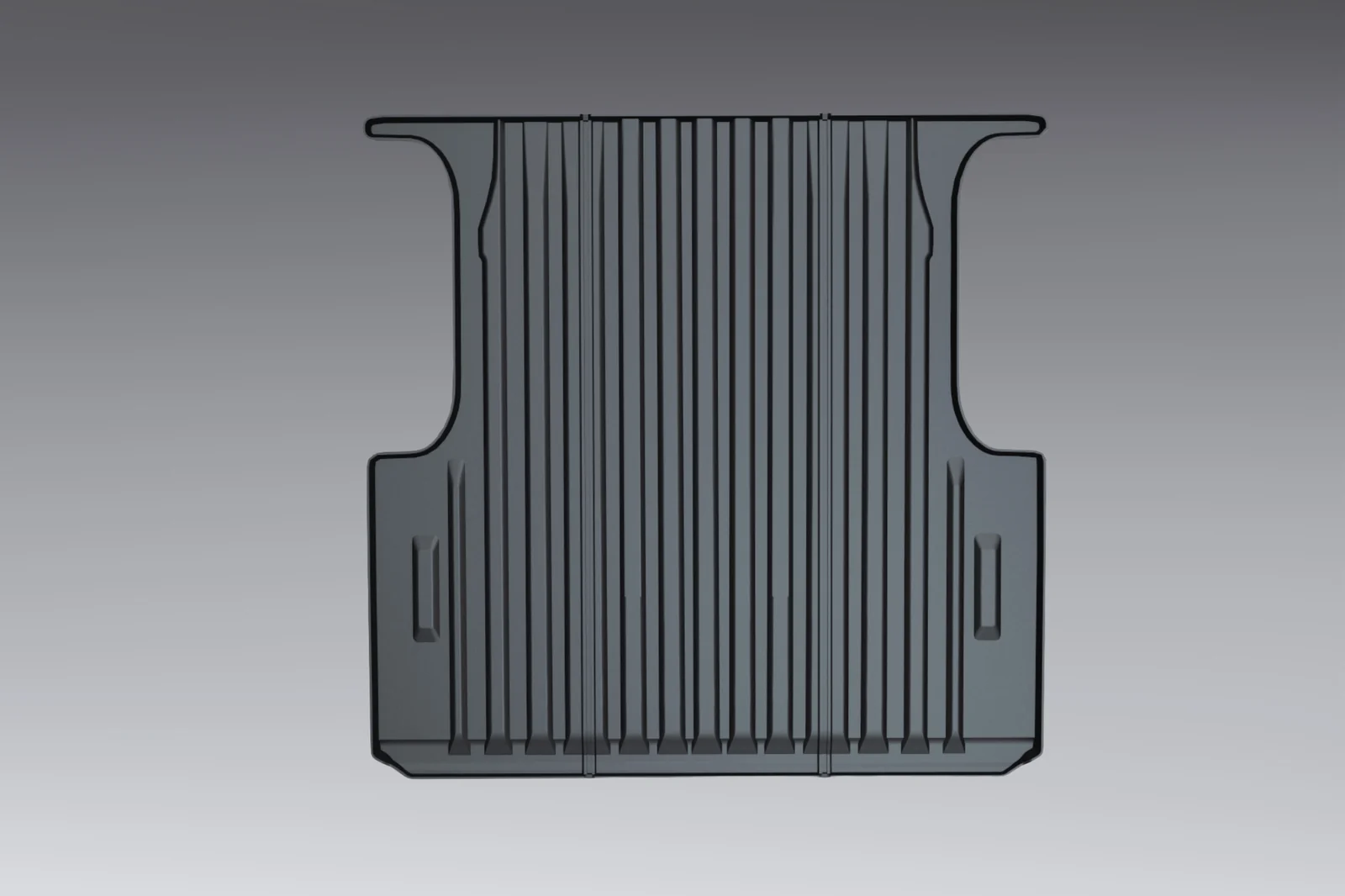
What an OEM programme covers.
Interior protection
Custom-fit floor mats, 3D floor liners, cargo mats and dash mats, developed around the vehicle’s actual footwell and load area.
Exterior protection
Bonnet protectors, weather shields and mud flaps, shaped around body lines and mounting interfaces.
Everyday accessories
Organisers, sun shades, seat covers and wheel covers, coordinated with the core range rather than treated as add-ons.
Brand-led design
Colour, surface pattern, texture, edge finish, badge placement and packaging direction, agreed against samples.
Documentation
Specifications, sample approvals and change records kept aligned to the version that is actually in production.
Repeat supply
Programmes are planned for repeat orders, with the approved reference carried forward rather than re-specified each run.
Coverage across Australia’s leading brands.
Applications are developed against a specific model, year and variant. The marques below are the ones most frequently requested in Australian programmes; coverage is confirmed for each vehicle before a programme is approved.
- Toyota
- BYD
- Ford
- Kia
- Mazda
- MG
- Hyundai
- GWM
- Geely
- Chery
- Mitsubishi
- Isuzu Ute
- Subaru
- Nissan
- Volkswagen
- BMW
- Mercedes-Benz
- Honda
- Volvo
- LDV
- Omoda Jaecoo
Vehicle marques are shown as application references. They do not confirm that every model, year or variant is covered.
Six stages, each with a decision.
Application definition
Vehicle, accessory categories, target market and timing. Coverage limits are set here: which variants are in, which are out.
Vehicle scan and CAD
The footwell, tub or body interface is captured and modelled, so the pattern reflects the real vehicle rather than a generic shape.
Prototype and fit-check
Retention, clearances and interference with pedals, seat tracks or trim are checked on a representative vehicle.
Tooling and sample approval
Tooling follows stable geometry. Samples from that tooling are assessed against the agreed specification, which then becomes the reference.
Validation
The evidence required for your market is agreed and checked — scope depends on the product and the destination, so it is set rather than assumed.
Production and repeat supply
Production runs to the approved reference with agreed inspection points, and changes go through a variation process.
What we need to start.
Vehicle application — make, model, year, body style and variant, not only the badge, because trim and interfaces change within a model name.
Categories and brand direction — which accessory categories are in scope, and whether the range carries your branding, colours or packaging.
Volumes and timing — indicative quantities, target launch timing and the approval stages you need to work through internally.
Please do not include confidential drawings or commercially sensitive information in your first enquiry.

Before you commit.
Do you work with brands that have no accessory range yet?
Yes. A programme can start from a vehicle application and a category, without an existing range. The brief defines what is being developed; the range is built from there.
What size of programme do you take on?
It depends on the product and the buyer type. The minimum is agreed at brief stage, once the category and specification are known.
How long does a programme take?
It depends on the tooling and how much sample approval is required. The stages and their timing are agreed at brief stage rather than quoted as a single number.
Read the brief guide