
Dual-cab ute tub liner programme
A tub liner range developed across cab and tub variants, with rail type, tie-downs and drainage confirmed before tooling.
What had to be solved.
The range had to cover more than one tub configuration without multiplying part numbers, and without assuming that one tub shape fits every variant of the same model.
The buyer needed a liner that sat correctly over the tub floor and against the tailgate, worked with the rail system already fitted, and did not trap water around the drain points.
| Category | Ute tub liners |
| Vehicle type | Dual-cab utes |
| Scope | Multi-variant fitment |
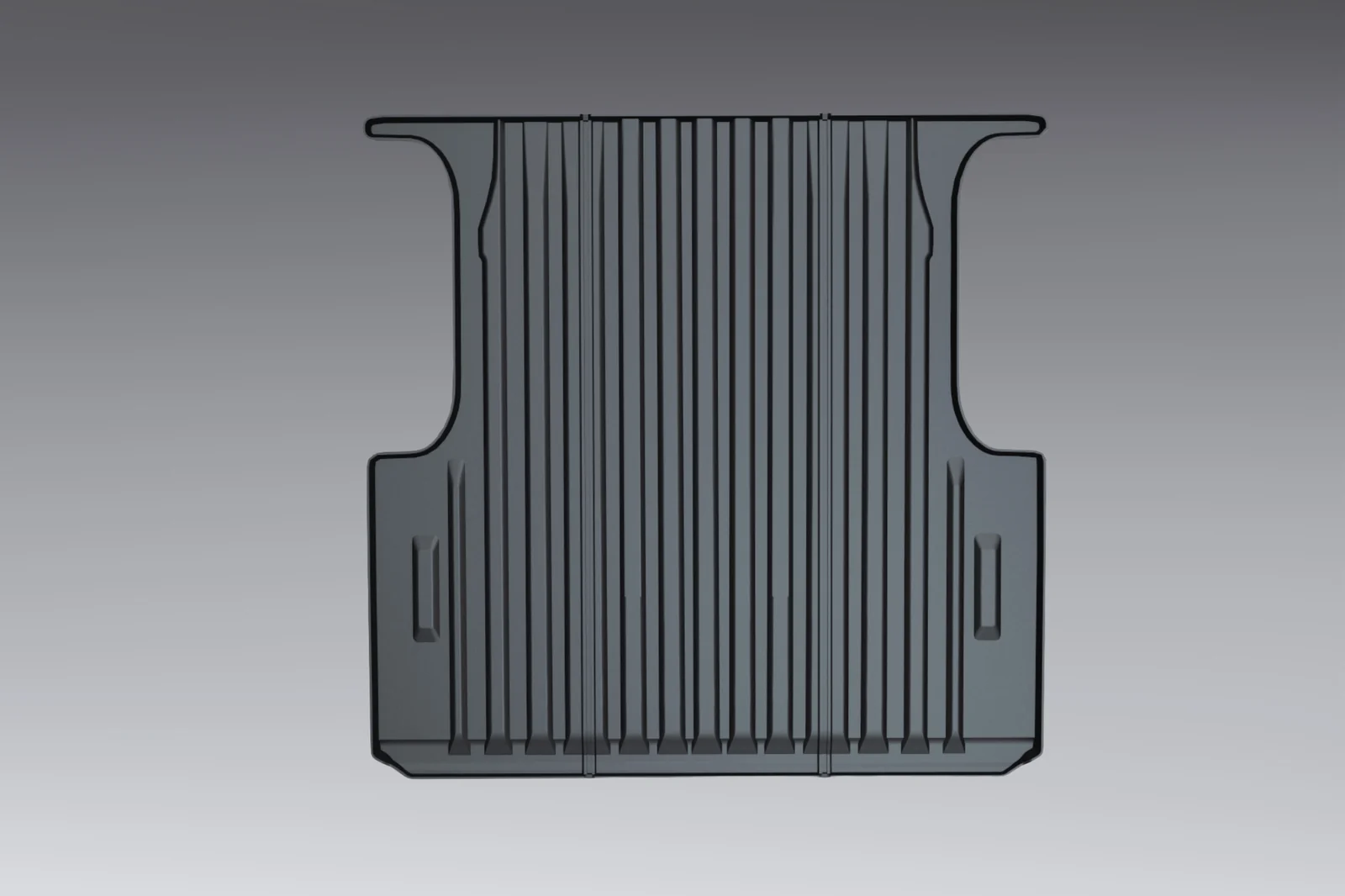
How the programme ran.
Map the variants
Cab style, tub length, rail type and tailgate were listed per application, so the range could be grouped by real differences rather than by badge.
Scan the tubs
Each retained tub configuration was measured and modelled, capturing the ribs, tie-down positions and drain channels that a liner has to clear.
Fit-check the prototype
Prototypes were fitted to representative vehicles to check tailgate closure, rail clearance, load movement and water path.
Freeze the reference
The approved sample became the written reference for material, thickness, edge treatment and fixings, so production and reorders match it.
The output, not the promise.
- Tub liner patterns grouped by tub configuration rather than by model name
- Material and thickness agreed against a physical sample
- Edge treatment and fixing method recorded on the reference
- Drain and tailgate clearance verified on a representative vehicle
- Carton and labelling specification agreed for the range
Three decisions that mattered.
Fewer part numbers
Grouping by tub configuration avoided creating a separate part for every badge variation.
No drainage surprises
Checking the water path before tooling removed the most common complaint about tub liners.
A reference that survives
Because the approved sample was documented, repeat orders did not drift.